Optical Illusions
Hello again everyone. Where did this last week go? I've been working hard and time has flown by. This week I've prepared an edition of ENK on optical illusions, something that really interests me. Do you have a favourite optical illusion?
Here is this week's edition:
Culture
Trick Art
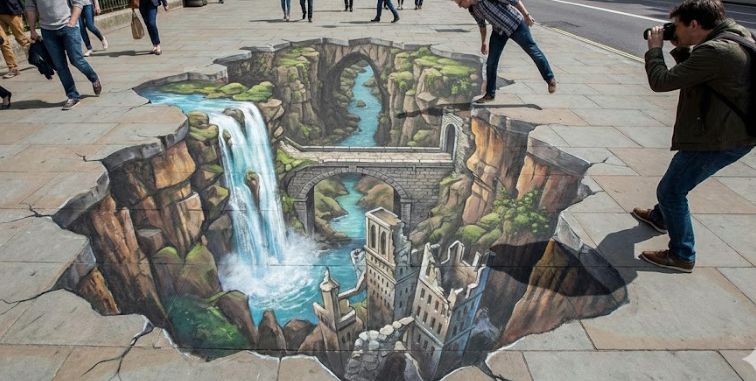
Do you know about trick art?
It is a kind of art that looks real but it is flat.
Artists draw on a wall or on a floor.
You can stand in the picture and take a cool photo.
It is very fun to see!
한국어 번역 보기
- Do you know about trick art? 트릭아트에 대해 알아요?
- It is a kind of art that looks real but it is flat. 트릭아트는 진짜처럼 보이지만 평평한 그림이에요.
- Artists draw on a wall or on a floor. 화가들이 벽이나 바닥에 그림을 그려요.
- You can stand in the picture and take a cool photo. 그림 속에 서서 멋진 사진을 찍을 수 있어요.
- It is very fun to see! 보는 게 정말 재미있어요!
| artist | 미술가 |
|---|---|
| picture | 그림 |
| draw | 그리다 |
| real | 진짜의 |
| flat | 평평한 |
| take | 찍다 |
| kind | 종류 |
| trick | 눈속임 |
Culture
Hidden Images

Some pictures have hidden images inside them.
This is very clever!
When you first look, you see one thing.
But if you look closer, you might see a different shape.
Maybe an animal or a hidden face!
The artist uses lines and shadows to hide the second picture.
It’s always fun to search and find the hidden surprise!
한국어 번역 보기
- Some pictures have hidden images inside them. 어떤 그림들은 안에 숨겨진 그림이 있어요.
- This is very clever! 정말 기발하죠!
- When you first look, you see one thing. 처음에 볼 때는 한 가지를 봐요.
- But if you look closer, you might see a different shape. 하지만 더 자세히 보면 다른 모양을 볼 수도 있어요.
- Maybe an animal or a hidden face! 동물이나 숨겨진 얼굴일 수도 있어요!
- The artist uses lines and shadows to hide the second picture. 화가는 선과 그림자를 사용해서 두 번째 그림을 숨겨요.
- It’s always fun to search and find the hidden surprise! 숨겨진 그림을 찾는 것은 항상 재미있어요!
| artist | 예술가 |
|---|---|
| hidden | 숨겨진 |
| clever | 영리한 |
| inside | 안에 |
| completely | 완전히 |
| search | 찾다 |
| different | 다른 |
| surprise | 놀라움 |
Science
Optical Illusion
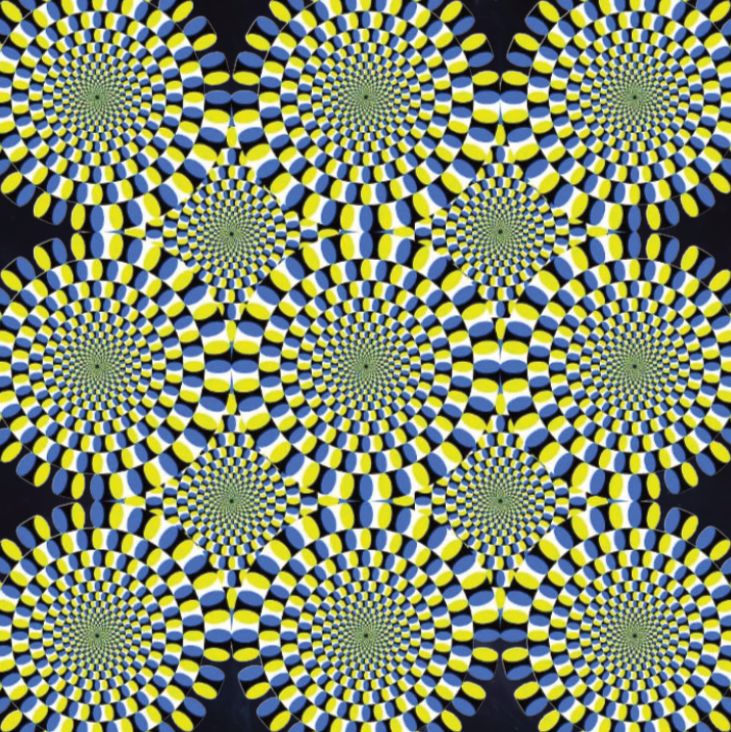
Have you ever seen something that tricked your eyes?
That's called an optical illusion!
Our eyes and brain work together like a team to understand the world.
Our eyes collect light and send messages to the brain.
But sometimes, when a picture has special lines, colors, or shapes, it confuses the brain.
The brain tries to make sense of the confusing picture, which makes us see things that are not truly there.
It’s not magic.
It’s just your brain and eyes having a playful disagreement.
한국어 번역 보기
- Have you ever seen something that tricked your eyes? 눈을 속인 것을 본 적이 있어요?
- That's called an optical illusion! 그걸 착시 현상이라고 해요!
- Our eyes and brain work together like a team to understand the world. 우리의 눈과 뇌는 세상을 이해하기 위해 팀처럼 함께 일해요.
- Our eyes collect light and send messages to the brain. 우리의 눈은 빛을 모아서 뇌에 신호를 보내요.
- But sometimes, when a picture has special lines, colors, or shapes, it confuses the brain. 하지만 그림에 특별한 선이나 색깔, 모양이 있으면 뇌가 헷갈려요.
- The brain tries to make sense of the confusing picture, which makes us see things that are not truly there. 뇌가 헷갈리게 하는 그림을 이해하려고 노력하면서 실제로 있지 않은 것을 보게 되는 거예요.
- It’s not magic. 마법은 아니에요.
- It’s just your brain and eyes having a playful disagreement. 그냥 여러분의 뇌와 눈이 재미있게 의견을 달리하는 거예요.
| collect | 수집하다 |
|---|---|
| length | 길이 |
| disagreement | 불일치 |
| optical | 시각의 |
| exactly | 정확하게 |
| playful | 장난기 많은 |
| illusion | 착시 |
| truly | 정말로 |
Science
Impossible Shapes
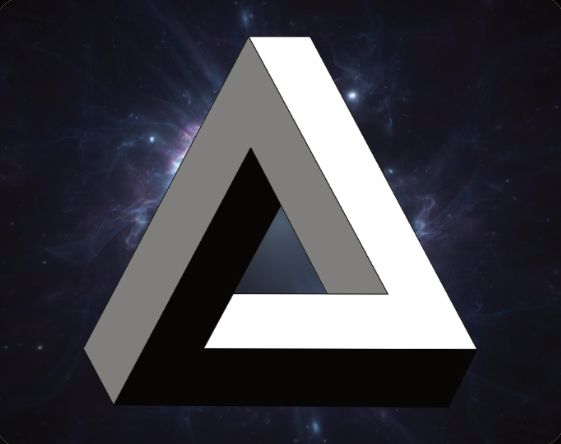
Some optical illusions are special because they show us impossible shapes, which are drawings that look solid and real but could never exist in the three-dimensional world.
One famous example is the Penrose Triangle.
If you look at it, you see three straight bars connected in a triangle, but as your eye follows the connections, the corners seem to go in different directions.
It appears to be turning away and coming toward you at the same time!
Another illusion is the Borromean Rings.
These three rings are linked so that if you remove any one ring, the other two fall apart, even though no two individual rings are actually linked together.
한국어 번역 보기
- Some optical illusions are special because they show us impossible shapes, which are drawings that look solid and real but could never exist in the three-dimensional world. 어떤 착시는 특별해요. 왜냐하면 불가능한 모양을 보여주거든요. 불가능한 모양은 입체적이고 실제처럼 보이지만 3차원 세계에서는 절대 존재할 수 없는 그림이에요.
- One famous example is the Penrose Triangle. 한 가지 유명한 예는 펜로즈 삼각형이에요.
- If you look at it, you see three straight bars connected in a triangle, but as your eye follows the connections, the corners seem to go in different directions. 그것을 보면 세 개의 직선 막대가 삼각형으로 연결되어 있는 것처럼 보여요. 하지만 눈이 그 연결 부분을 따라가면 모서리들이 다른 방향으로 가는 것 같아요.
- It appears to be turning away and coming toward you at the same time! 마치 동시에 멀어지면서 다가오는 것처럼 보여요!
- Another illusion is the Borromean Rings. 다른 착시는 보로메안 고리라고 해요.
- These three rings are linked so that if you remove any one ring, the other two fall apart, even though no two individual rings are actually linked together. 이 세 개의 고리는 서로 연결되어 있어서 어떤 한 고리를 빼면 나머지 두 고리가 떨어져요. 하지만 실제로는 어떤 두 개의 고리도 서로 연결되어 있지 않아요.
| amazing | 놀라운 |
|---|---|
| illusion | 착시 / 착각 |
| Borromean | 보로메오의 |
| impossible | 불가능한 |
| clever | 영리한, 기발한 |
| individual | 개개의, 각각의 |
| exist | 존재하다 |
| optical | 시각의, 광학의 |
Culture
M.C. Escher
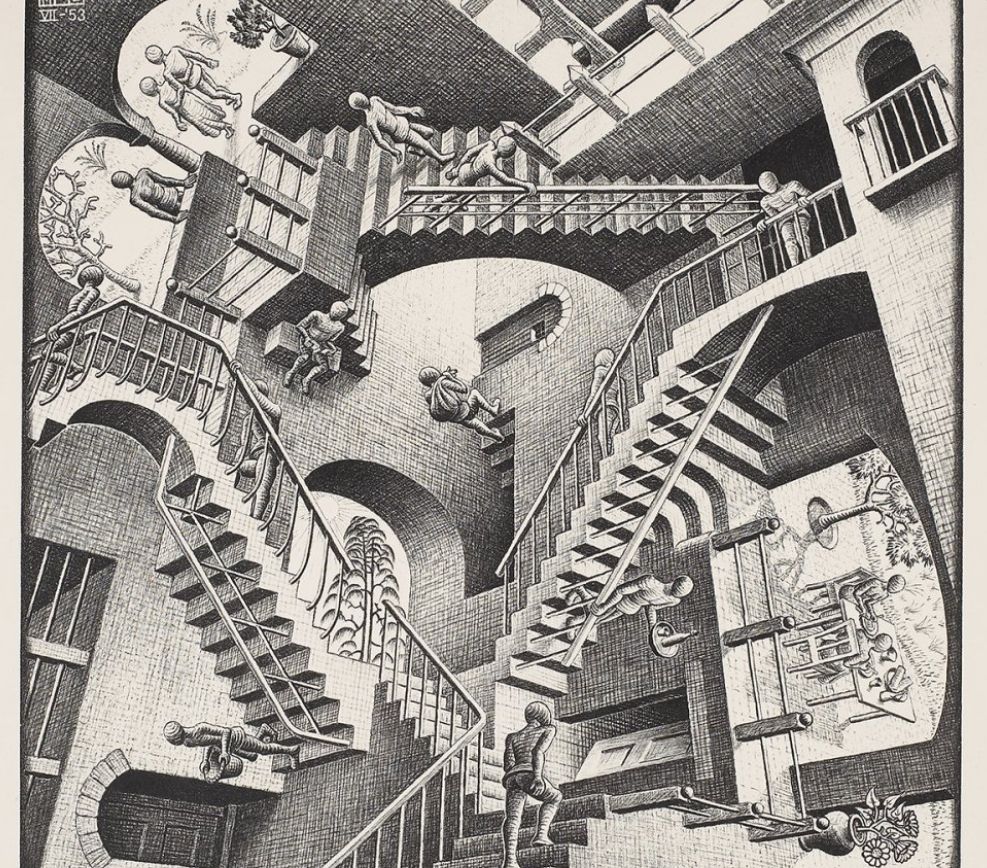
The artist M.C. Escher was a Dutch master of optical illusions who blended art, math, and mystery to create his celebrated works.
He is famous for two main kinds of art.
First off, tessellation.
This means filling a surface perfectly with repeating shapes, like puzzle pieces, with no gaps or overlaps.
He made these patterns with things like birds, fish, or reptiles, watching them transform across the picture.
Second, he perfected impossible drawings, which are pictures that seem logical in smaller sections but, when viewed as a whole, depict structures that couldn't possibly exist in the real world.
His lithographs, such as "Relativity" and "Waterfall," feature staircases that loop endlessly or water that flows uphill, visually demonstrating deep mathematical ideas and beautifully challenging our perception of reality and space.
한국어 번역 보기
- The artist M.C. Escher was a Dutch master of optical illusions who blended art, math, and mystery to create his celebrated works. 미술가 M. C. 에셔는 미술과 수학, 신비로움을 결합해 유명한 작품들을 만든 네덜란드의 착시 미술 거장이었어요.
- He is famous for two main kinds of art. 그는 두 가지 주요 미술 형식으로 유명해요.
- First off, tessellation. 먼저 테셀레이션이에요.
- This means filling a surface perfectly with repeating shapes, like puzzle pieces, with no gaps or overlaps. 이것은 퍼즐 조각처럼 반복되는 도형으로 표면을 완벽하게 채우는 거예요. 틈이나 겹침이 없어요.
- He made these patterns with things like birds, fish, or reptiles, watching them transform across the picture. 그는 새, 물고기, 파충류 같은 것들로 이런 패턴을 만들었어요. 그림 전체에서 그것들이 변하는 모습을 볼 수 있어요.
- Second, he perfected impossible drawings, which are pictures that seem logical in smaller sections but, when viewed as a whole, depict structures that couldn't possibly exist in the real world. 두 번째로, 그는 불가능한 구조를 그리는 기법을 완성했어요. 이런 그림은 작은 부분만 보면 논리적으로 보이지만, 전체로 보면 현실에서는 존재할 수 없는 구조를 보여줘요.
- His lithographs, such as "Relativity" and "Waterfall," feature staircases that loop endlessly or water that flows uphill, visually demonstrating deep mathematical ideas and beautifully challenging our perception of reality and space. 그의 석판화 작품인 '상대성'과 '폭포' 같은 것들은 끝없이 이어지는 계단이나 위로 흐르는 물을 보여줘요. 깊은 수학적 개념을 시각적으로 보여주면서, 현실과 공간에 대한 우리의 인식에 아름다운 방식으로 도전해요.
| blended | 섞인, 혼합된 |
|---|---|
| lithographs | 석판화 |
| celebrated | 유명한 |
| optical | 시각의, 광학의 |
| depict | 묘사하다, 그리다 |
| perception | 지각, 인식 |
| endlessly | 끝없이 |
| tessellation | 테셀레이션 |